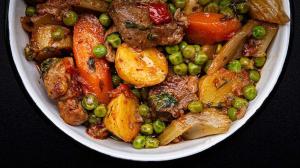
Discover how humble green peas are transformed into a deeply comforting, tavern-style winter feast by pairing rich pork or beef with caramelized tomato, warm allspice, and a silky olive oil emulsion through a seamless stovetop-to-oven braise !
In the vast tapestry of Greek home cooking, green peas (arakas) occupy a singular position of quiet brilliance, serving as the quintessential vehicle for the philosophy of lathera—dishes where humble vegetables are elevated through the transformative power of extra virgin olive oil, slow-cooked onions, and aromatic herbs. Whether harvested fresh in the tender spring months or drawn from the freezer during the dead of winter, peas possess a natural sweetness and starch content that reacts harmoniously with fats and acids, creating sauces of remarkable depth and glossiness without the need for artificial thickeners or flour.
This seasonal duality defines the evolution of arakas across the Hellenic culinary calendar. In the sun-drenched warmth of summer, the kitchen shifts toward bright, restorative preparations such as arakas laderos lemonato, where young garden peas are simmered gently with fresh dill, fennel bulb or artichoke hearts and new potatoes, and a generous finishing splash of freshly squeezed lemon juice that accentuates their vibrant, chlorophyll-rich green profile. These lighter, citrus-forward iterations celebrate the freshness of the immediate harvest, relying entirely on clean acidity and herbaceous top notes.
Conversely, as temperatures plunge, Greek culinary traditions pivot toward restorative, hearth-warming comfort, introducing protein and deeper savory notes into the pot. Winter arakas kokkinistos pairs sweet green peas and waxy potatoes with rich cuts of pork shoulder or beef shank, marrying them into a robust stew anchored by double-concentrated tomato paste, red wine, and warm regional spices. Drawing from Peloponnesian and Asia Minor influences, this tavern-style approach integrates whole allspice berries and a delicate snippet of cinnamon stick, creating a complex aromatic bridge between the rich animal fats and the sweet garden vegetables.
To achieve the ideal texture and flavor profile for this winter classic, this recipe abandons traditional all-in-one stovetop simmering in favor of a precise, two-stage thermodynamic method. The process begins on the stovetop in a wide stainless steel pot for the essential batch-searing of the meat and the gentle melting of onions and root vegetables with tomato paste and oregano. It then transitions seamlessly into a sealed rectangular baking dish in the oven, where a controlled 175°C environment allows the potatoes, carrots, celery, and meat to braise evenly, building a rich, unified sauce without scorching the bottom.
Culinary execution is inherently adaptable, allowing for personal adjustment based on pantry availability and preference. If your vegetable inventory runs light on root vegetables, you can effortlessly bolster the bulk and body of the dish by increasing the quantity of green peas without disrupting the structural balance.
Similarly, if you prefer a looser, more spoonable tavern-style sauce that pools generously around crusty sourdough bread, you can modulate the liquid ratios by adding a touch more warm stock, red wine and/or more crushed tomatoes during the braise, ensuring a silky, emulsified finish every single time.
So tie your apron, preheat the oven, and prepare to bring the timeless, soul-warming hospitality of the Greek taverna straight to your winter table ... :)