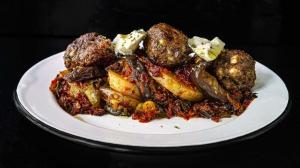
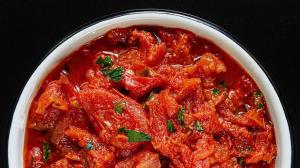
"Briam" is a classic cornerstone of Greek cuisine, an iconic baked vegetable dish that celebrates the harvest of the Mediterranean garden. While quintessentially associated with summer, it transitions beautifully into early autumn. In fact, late-season eggplants, zucchini, and tomatoes harvested in September and October often contain less water and more concentrated sugars, allowing the vegetables to roast and caramelize even more effectively.
Traditionally known as briam, it is essentially a rustic, oven-roasted layered "ratatouille" or "tian", where thickly sliced vegetables are generously coated in local olive oil and baked slowly until meltingly tender. Its roots stretch back through Ottoman influences, evolving from simple clay-pot village cooking into a beloved national standard that balances natural sweetness with the bright acidity of ripe tomatoes. When prepared as a less dense thus more watery stove-top stew, it is called "tourlou".
While Briam shares a distinct culinary lineage with French ratatouille, Spanish pisto, Italian ciambotta, and Turkish türlü and/or Greek tourlou, its defining characteristic is how it is prepared and cooked. Unlike the stovetop braising common in some of its cousins, Greek Briam is always baked in the oven. Over the years, modern home cooks have refined the dish, moving away from haphazardly tossing the vegetables into a deep pot to carefully shingling the slices in a wide, shallow dish. This modern modification maximizes surface area, allowing the natural sugars in the vegetables to roast and caramelize rather than simply boiling in their own juices.
Choosing the right baking dish is critical to achieving this desired texture, and this recipe is specifically calibrated for a volume of 3.5 liters. Because the vegetables need to be tightly packed in a single shingled layer, maintaining a shallow depth of about 5 centimeters is essential for proper evaporation. You can use a 30 cm round dish, a 27 cm square dish, a 35 x 20 cm rectangular dish, or a 37 x 24 cm oval dish. If the dish is too deep or narrow, the vegetables will steam and turn mushy; if it is too wide, they will dry out before becoming tender.
The secret to a successful briam lies in the preparation, specifically the crucial step of salting and purging the eggplant and zucchini. These vegetables have high water content, and if placed directly in the oven, they will release their juices, resulting in a watery, diluted sauce. By resting the 1cm thick slices on a wire rack with salt for 45 to 60 minutes, you draw out the excess moisture and bitter compounds. It is important to note that the vegetables, especially the eggplant, will shrink significantly during this purge. You must always test your layout in the baking dish while the vegetables are still raw and increase the number of slices to ensure you have enough slices to pack the dish tightly once they have shrunk.
While traditional Briam is almost exclusively a vegetarian dish served simply with a wedge of feta cheese and crusty bread to mop up the olive oil, this version elevates it into a more substantial, guest-worthy meal. By incorporating the salty, tangy profile of barrel-aged feta directly into a batch of lemony, herb-flecked meatballs made from a blend of beef and pork, you transform a rustic side dish into a spectacular, unified main course. The meatballs are roasted concurrently with the vegetables, ensuring everything finishes at exactly the same time.
Because preparing the vegetables, purging them, and building the rich tomato-herb sauce requires time and effort, this recipe is designed to produce a large, generous yield of almost 3 kilograms. It is purposely scaled to feed 6 to 8 people or to guarantee excellent leftovers. Both the cooked Briam and the feta meatballs refrigerate beautifully, with the flavors of the vegetables actually deepening after a day or two. Furthermore, both components are highly resilient and can freeze exceptionally well for up to three months, making this large-format bake an ideal weekend project for stocking your freezer.
Autumn is here so start your summer food prepping & baking & storage soon ... :)